
If you have ever walked through York’s School of the Arts, Media, Performance & Design (AMPD) during project season, chances are you’ve seen Design students rushing between studio classes, carrying oversized posters or passionately debating fonts.
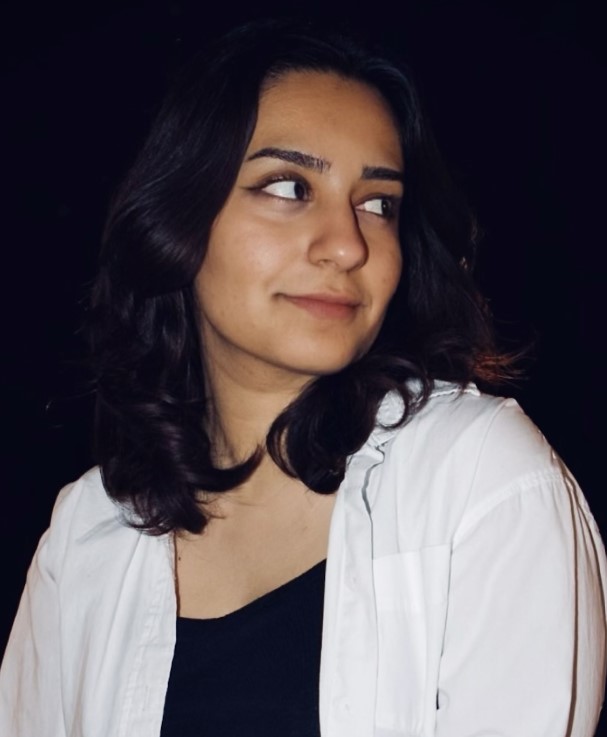
For newly graduated Design student Shanthuru Kalaiselvan, that creative energy is exactly what made York’s Bachelor of Design program such a memorable experience.
From collaborative critiques and branding projects to internships and late-night creative breakthroughs, Shanthuru says the program helped him grow not only as a designer but also as a creative thinker.
Looking back, he says York gave him far more than technical design skills.
Finding the right creative fit
Before choosing York, Shanthuru considered several different graphic design programs. What ultimately stood out to him about York was that “the program had a great combination of both theory and hands-on learning.”
He was also drawn to the student work he saw online and the sense of community within AMPD. That close knit environment quickly became one of the defining parts of his university experience.
With a graduating class of around 44 students, the Design program naturally creates strong connections between classmates. Students share studio spaces, spend time in labs and constantly collaborate through critiques and projects.
“You kind of get to know everyone,” Shanthuru said.
For him, those friendships and creative relationships became just as valuable as the coursework itself.
Learning through the process
“The program is really about the process and how you get to your final design,” Shanthuru explained.
In their first year, students build strong creative foundations and begin learning various software. They also learn how to think intentionally, develop concepts and refine ideas through feedback and iteration.
As students move into upper years, they also gain more flexibility to explore areas that interest them most. For Shanthuru, that became branding design. Other students pursued user interface (UI) and digital design pathways depending on their creative interests.
One course that particularly stood out to him was a fourth-year branding class where students spent an entire semester building and developing their own brand concepts.
“It’s something memorable because you actually enjoy what you’re doing,” he said.
More than a classroom
For many students, one of the most memorable parts of the program is the Fab Lab itself.
York’s Fabrication Lab gives students access to printing equipment, bookmaking tools, cutting machines and creative production resources used throughout the degree.
But according to Shanthuru, the space also becomes a social and creative hub.
Students from every year gather there to print projects, work through ideas, ask questions and help each other during busy deadlines. The lab technicians are also a huge part of the experience, always ready to troubleshoot printing disasters or answer questions before a critique.
“It’s a very nice community,” he said about the atmosphere inside the space.
From student projects to the professional world
By third year, students begin stepping directly into the professional design world through the program’s internship component. Shanthuru completed his internship at the design studio Plan of Record, where he gained firsthand exposure to client workflows, industry expectations and the realities of working in a creative studio environment.
Now focused on refining his portfolio and preparing for the job market, Shanthuru says York helped him grow not only as a designer but also as a collaborator, communicator and creative thinker.
Seeing how designers actually work with real clients was super cool,” he said while reflecting on his internship experience. “It was reassuring to realize that after everything we worked on throughout the program, I wasn’t too far off from what people actually do in the industry.”
Looking back, he believes the program gave him much more than technical skills. It gave him confidence in his creative voice, friendships that lasted beyond the classroom and a clearer sense of the kind of work he wants to pursue moving forward.
For future students considering design, his advice is simple: stay curious, embrace the creative process and do not be afraid to experiment.
Because sometimes the best parts of Design school are not just the final projects. They are the ideas, people and experiences that shape you along the way.